Built Compliant. Documented Properly.
Every ASC product is engineered to Australian Standards, comes with full documentation, and is backed by independent inspection. Your crew protected. Your project compliant.
The Standard
AS 4744 — What It Means for Your Site
Australian Standard AS 4744 is the benchmark for steel shoring components used in trench excavation. It defines the engineering requirements, load ratings, and testing protocols that shoring equipment must meet to protect workers in below-ground excavation.
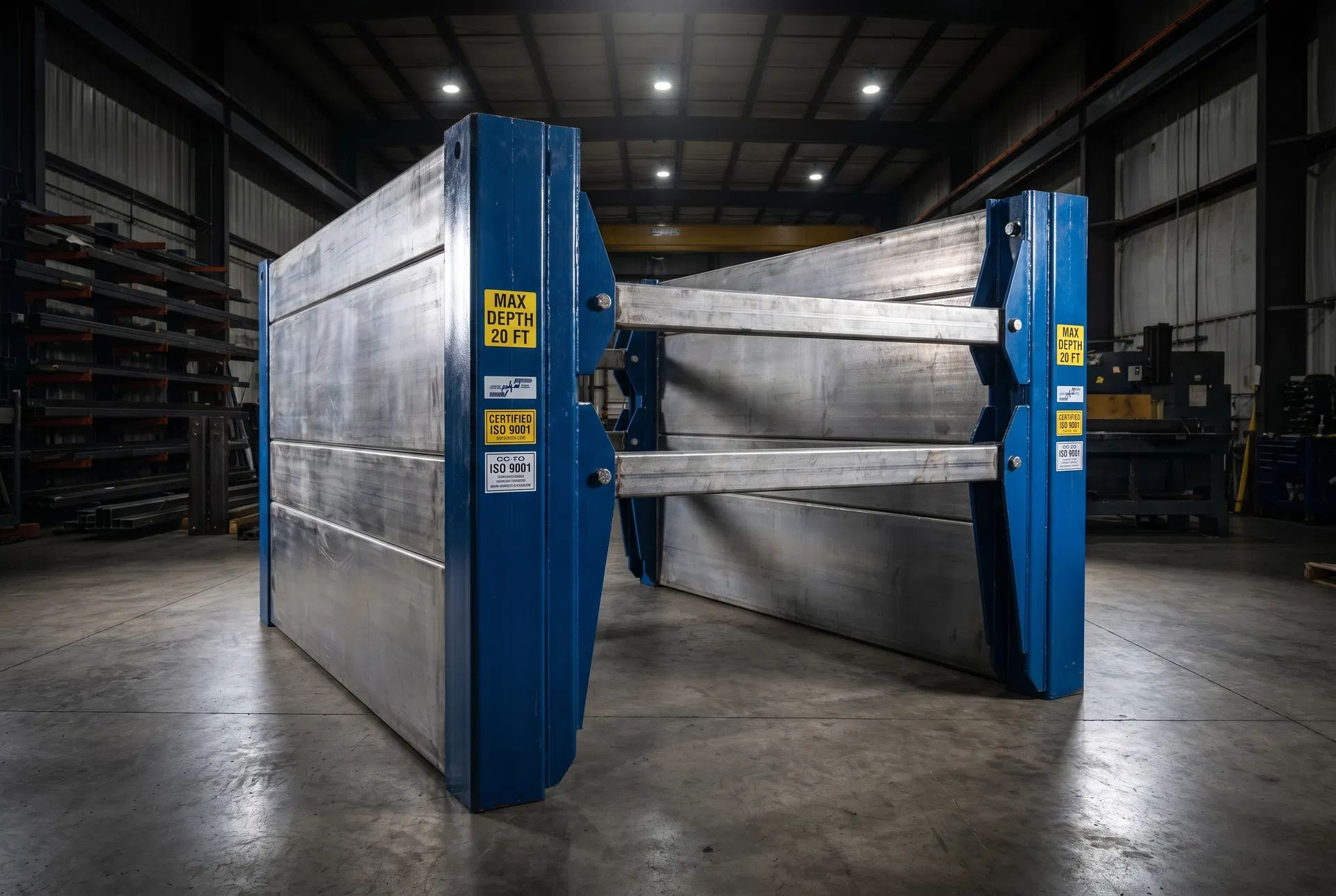
Every trench shield, manhole box, slide rail panel and hydraulic strut in the ASC range is engineered, tested and certified to AS 4744. That means your crew is working with gear that has been independently verified for the loads it will encounter — not just the loads someone hopes it will encounter.
- Independently engineered to AS 4744 specifications
- Tested for the soil and depth ratings stated on the certificate
- Manufactured under documented quality control
- Aligned with WHS legislation in every Australian state and territory
What You Receive
Documentation With Every Hire & Sale
No paperwork chase. No follow-up calls. Every ASC product ships with the documentation you need to demonstrate compliance — for your principal contractor, your insurer, or the regulator.
Engineering Compliance Certificate
Signed certification confirming the equipment is engineered to AS 4744, with stated load ratings, depth limits, and approved soil categories.
Pre-Hire Inspection Report
Sign-off from our depot team confirming the unit is in serviceable condition before it leaves for site, with any noted wear or repairs documented.
AS 4744 Certification
Manufacturer's certification documents covering the design, materials, weld procedures, and testing records that underpin the engineering certificate.
Operator User Manual
Step-by-step guidance for installation, configuration, struts and pin placement, depth ratings, and decommissioning. Plain English. Built for site use.
SWMS Reference Notes
Reference content to support your Safe Work Method Statement, covering the hazards, controls and PPE specific to working with shoring equipment.
Maintenance & Service Records
Service history for each unit in the hire fleet — every inspection, repair, weld test and structural check. Available on request.
Our Process
Four-Stage Inspection Program
Every piece of equipment in our hire fleet passes through four checkpoints — three operational, one independent — before, during, and after every job.
Pre-Hire Inspection
Depot inspection before dispatch. Visual, dimensional, and structural check. Wear, damage, and weld integrity all signed off in writing.
Site Handover
Documentation pack delivered with the unit. Engineering certificate, inspection report, and user manual handed to the site supervisor on arrival.
Post-Hire Return
Depot inspection after collection. Damage assessed, repairs scheduled, and the unit re-certified before it goes back into the fleet.
Annual Independent Review
Each unit receives a structural review by an independent engineer on a defined cycle. Records kept and provided on request.
Shared Responsibility
What You're Responsible For
Compliant equipment is half of the picture. The site, the operators, and the work practices are the other half — and they sit with you.
Trained, competent operators. Anyone installing or working with shoring must hold the relevant ticket and demonstrated experience.
Site-specific Safe Work Method Statement. A SWMS that addresses the actual hazards on your job — not a generic template.
Soil classification & ground conditions. Confirmed soil category, water table, and adjacent loads before equipment is selected and installed.
Permits & approvals. Excavation permits, Dial Before You Dig, and any council or principal-contractor sign-offs your job requires.
Pre-use inspection. A daily visual check of the equipment on site, with any concerns reported to ASC before the unit goes in the trench.
State & federal WHS legislation. Compliance with the WHS Act and Regulations applicable to the state or territory where work is performed.
Common Questions
Compliance, Answered
The questions we hear most often from contractors, principal contractors, and HSE managers.
AS 4744 is the Australian Standard covering steel shoring components used in trench excavation. It sets the engineering, load and testing requirements that shoring equipment must satisfy. Working to AS 4744 means the gear has been independently engineered for the conditions stated on the certificate — not assumed safe by reputation.
Engineering documentation must be available for the equipment used on site, and your SWMS will reference it. Whether your specific job needs additional site-specific engineering depends on the depth, soil class, surcharge loads, and your jurisdiction's WHS requirements. If you're not sure, talk to us before you order — we can flag when a site-specific design is the right call.
The Engineering Compliance Certificate, Pre-Hire Inspection Report, AS 4744 Certification, Operator User Manual, SWMS Reference Notes, and Maintenance Records on request. The full pack is delivered with the equipment and emailed in PDF for your project records.
ASC is responsible for the equipment's compliance with AS 4744 and the integrity of every unit when it leaves the depot. The PCBU on site — usually the principal contractor or hirer — is responsible for the work practices, the SWMS, the operators, soil conditions, and pre-use inspection. The compliance pack we ship covers our half; your SWMS covers yours.
Each unit's Engineering Compliance Certificate states the approved soil categories and maximum depth. The user manual covers the strut configurations and stacking limits. If your conditions sit outside the certificate, we'll either point you to a different unit or arrange site-specific engineering.
Yes. Our team are contractors first — we read these documents the same way you do. Get in touch and we'll walk through any part of the pack you need clarified, including for your principal contractor or insurer.
Need a Compliance Pack for Your Project?
Talk to our team. We'll match the right equipment to your job, send the documentation up front, and answer any compliance question before you sign anything.